
Manitoba has passed a new law that changes when employers can ask employees for a sick note.
The law is called The Employment Standards Code Amendment Act (Sick Notes for Employee Absences), S.M. 2026, c. 10.
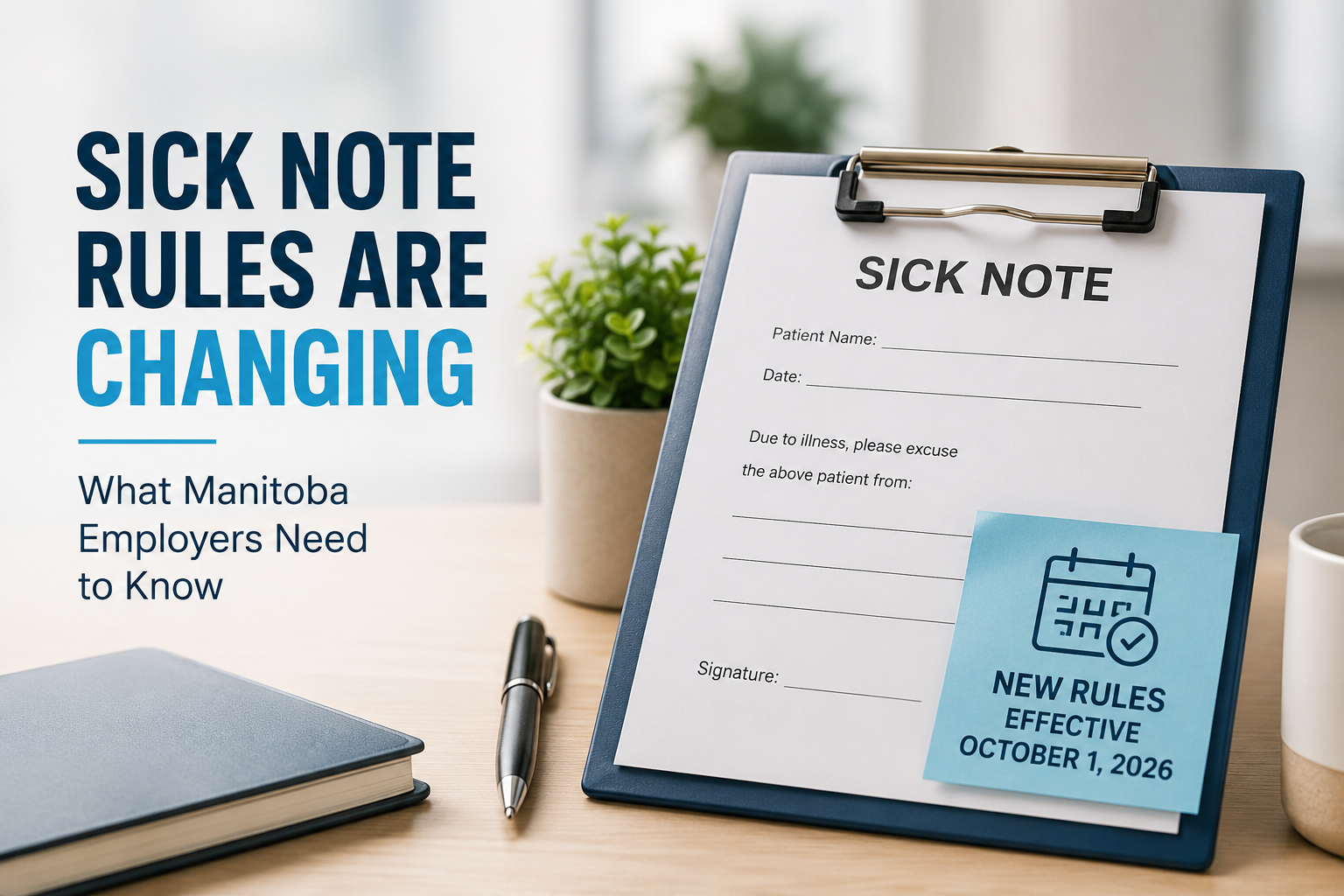
It received Royal Assent on June 1, 2026 and comes into force on October 1, 2026.
summary
Employers will not be allowed to ask for a medical professional’s sick note until an employee has been away for 10 days within a calendar year. Employers must also pay for the sick note.
What is changing?
Starting October 1, 2026, employers in Manitoba will not be able to ask for a sick note for most short-term absences.
An employer can only ask for a sick note if:
- the employee is away for more than one week because of illness or injury; or
- the employee has already missed more than 10 scheduled workdays in the same calendar year because of illness or injury.
- A partial day away from work will count as a day of absence.
So Practically
Days 1–10 in the calendar year: no sick note under the 10-day rule.
Day 11: yes, you can require a sick note, because the employee has now been absent for more than 10 scheduled workdays in a calendar year due to illness or injury.
Partial-day illness/injury absences can count as a day for this purpose.
What this means for employers
Employers should not automatically ask for a doctor’s note every time an employee calls in sick.
This does not mean employers cannot manage attendance. Employers can still require employees to report absences properly and follow workplace attendance rules.
However, sick notes should only be requested when the new law allows it.
The note does not have to come from a doctor
If an employer is allowed to ask for a sick note, the note can come from different types of health professionals.
This may include a doctor, nurse practitioner, registered nurse, licensed practical nurse, psychologist, midwife, physician assistant, or other approved health professional.
Employers may have to pay for the note
This is an important change.
If an employer asks an employee to provide a sick note, the employer must repay the employee for the reasonable cost of getting that note.
The employee must give proof of the cost within 30 days after getting the note. The employer must then reimburse the employee within 30 days.
If the employer does not reimburse the employee, the amount may be treated as unpaid wages.
What employers should do before October 1, 2026
Manitoba employers should review their policies before the new rules take effect.
Employers should update:
- sick leave policies;
- attendance management policies;
- medical note forms;
- supervisor training;
- return-to-work procedures; and
- payroll or reimbursement processes.
Supervisors should also be trained not to ask for sick notes automatically.
What is not changing?
This law does NOT create paid sick leave.
It also does not stop employers from asking for medical information in other situations where it is allowed, such as return-to-work planning, workplace accommodation, or certain protected leaves.
Bottom line
Starting October 1, 2026, Manitoba employers will have stricter rules about when they can ask for sick notes.
For short-term illness or injury absences, sick notes should no longer be the default response.
Employers should focus on clear reporting rules, consistent attendance tracking, and careful use of medical documentation only when allowed.
References
- The Employment Standards Code Amendment Act (Sick Notes for Employee Absences), S.M. 2026, c. 10: https://web2.gov.mb.ca/laws/statutes/2026/c01026.php?lang=en
- Manitoba Legislature, Status of Bills 2025–26: https://manitoba.ca/legislature/business/billstatus.pdf
- DLA Piper, “Sick of sick notes: Manitoba is latest jurisdiction to curtail requests for doctors’ notes”: https://knowledge.dlapiper.com/dlapiperknowledge/globalemploymentlatestdevelopments/2026/sick-of-sick-notes-manitoba-is-latest-jurisdiction-to-curtail-requests-for-doctors-notes
Disclaimer: This post is for general information only and is not legal advice. Employers should review their own workplace policies, collective agreements, and specific situations before making changes.



Leave a Reply